
Dengue Test: NS1, IgM or CBC and When to Get Each
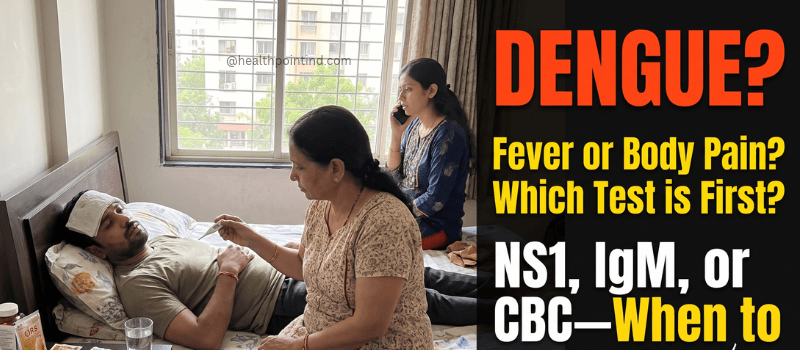
Dengue Test Guide: NS1, IgM or CBC, and Which Day to Test
A high fever with body aches, pain behind the eyes and crushing tiredness makes most families in Pune think of dengue straight away. The right test depends mainly on which day of fever you are on. In the first five days, the NS1 antigen test is the most useful because it detects the virus itself. From around day five onwards, the IgM antibody test becomes more reliable. A complete blood count, or CBC, is needed throughout, because it tracks the platelet count and haematocrit that tell your doctor how the illness is behaving. This guide explains each test, how to read the results and the warning signs that mean you should go to hospital instead of waiting for a report.
How Dengue Unfolds, Day by Day
Dengue usually runs through three phases, and knowing them makes the test results easier to understand.
The fever phase lasts about two to seven days. Fever is often high, with headache, eye pain, muscle and joint pain, nausea and sometimes a rash. The virus is circulating in the blood during this phase, which is why NS1 works well early.
The critical phase begins around the time the fever comes down, typically between day three and day seven. This is the part many people misunderstand. A falling temperature does not always mean recovery. In a small share of patients, fluid starts leaking out of the blood vessels, the blood thickens, and the platelet count drops sharply. Most complications happen in this window, so it is the time to watch most carefully.
The recovery phase follows over the next two to three days, when leaked fluid returns to circulation, appetite improves, and the platelet count starts climbing again.
Which Dengue Test to Ask For
NS1 antigen test
NS1 is a protein released by the dengue virus. It can be detected from the first day of fever and is most reliable during the first five days. An NS1 ELISA performed by a lab is more accurate than a rapid card test. A positive NS1 strongly suggests dengue. A negative result does not rule it out, especially if you test late or if this is your second dengue infection, because NS1 levels can fall quickly in repeat infections.
Dengue IgM antibody test
IgM antibodies are made by your immune system and usually become detectable from around day five of illness. That is why an IgM test done on day two often comes back negative even when dengue is present. IgM can stay positive for several weeks to a few months, so a positive result on its own may sometimes reflect a recent past infection rather than the current fever. Your doctor reads it together with your symptoms and timing.
Dengue IgG antibody test
IgG rises later and lasts for years. It is not used on its own to diagnose a fresh infection, but a high IgG early in the illness can suggest a secondary infection, which carries a higher risk of severe disease.
Complete blood count
The CBC is the test your doctor will repeat most often. It shows the platelet count, the white cell count, which is often low in dengue, and the haematocrit. A rising haematocrit together with a falling platelet count is one of the clearest signals that plasma leakage may be starting. During the critical phase, doctors commonly ask for a CBC every day or every other day. The ultrasound scan also has a role in hospital care, because an abdominal ultrasound can show fluid around the lungs or abdomen and gallbladder wall thickening before blood values change much.
Many doctors order NS1 and IgM together when the day of fever is uncertain, so that one test covers the gap left by the other. Fever during and after the monsoon has other causes too, such as malaria, chikungunya, typhoid and leptospirosis, and a fever panel may be suggested if the picture is not clear.
Understanding Your Platelet Count
A normal platelet count is roughly 1.5 to 4.5 lakh per microlitre. In dengue, it often falls below one lakh, and many patients see figures that look frightening on paper. A low number by itself is not the whole story. Doctors pay more attention to the trend, the haematocrit and the patient’s condition than to a single value.
Platelet transfusion is not routinely needed just because the count is falling. It is usually reserved for patients who are bleeding or whose count has fallen extremely low, and the decision is made by the treating doctor. Papaya leaf extract and similar remedies are widely shared, but the evidence that they change outcomes is limited, so they should never replace monitoring.
Sneha, a 29-year-old designer from Kharadi, developed fever with severe body ache on a Monday. An NS1 test on day two was positive. Her doctor asked for a CBC every day. Her platelets fell from 1.6 lakh to 58,000 by day five, just as her fever settled, and her haematocrit rose slightly. She stayed home on oral fluids and paracetamol under her doctor’s guidance, watched for warning signs and repeated the CBC. By day seven the count had started climbing, and she recovered without needing admission.
Warning Signs That Need Hospital Care
Go to a hospital emergency department without waiting for test results if any of these appear, particularly when the fever is coming down:
- Severe or persistent abdominal pain
- Vomiting that does not stop, or being unable to keep fluids down
- Bleeding from the gums or nose, blood in vomit or stools, or black stools
- Unusual drowsiness, restlessness or confusion
- Cold, clammy hands and feet, or feeling faint on standing
- Fast breathing or breathlessness
- Passing very little urine over several hours
Children, pregnant women, older adults and people with diabetes, kidney disease or heart disease should be seen by a doctor early, even with milder symptoms.
Common Mistakes During Dengue Fever
Avoid painkillers such as ibuprofen, diclofenac and aspirin, because they can increase the risk of bleeding. Paracetamol is the usual choice for fever and pain, in the dose your doctor advises. Drink plenty of fluids such as water, oral rehydration solution, coconut water and soups, unless your doctor tells you otherwise.
Do not test too early and stop there. An IgM test on day one or a single negative card test can give false reassurance. Equally, do not stop monitoring once the fever breaks, since that is when the critical phase begins.
Dengue mosquitoes breed in clean, stagnant water and bite mainly during the day. Emptying flower pot trays, water drums, coolers and discarded containers around your home and building, especially after the monsoon, helps protect your family and neighbours.
How Health Point IND Can Help
When your doctor writes dengue tests and a CBC, Health Point IND can book them at accredited partner labs across Pune and PCMC, with home sample collection available in many areas, which makes daily or alternate-day CBC monitoring much easier for someone unwell. Blood tests booked through us start at ₹299. Prices are up to 60% lower than typical walk-in rates at accredited diagnostic centres. Savings may vary based on location and lab. You can see the full range on our blood test page, or call +91 77964 00040 with your prescription. If you have warning signs, please go straight to a hospital instead of booking a test.
Frequently Asked Questions
Can the NS1 test be negative even if I have dengue?
Yes. NS1 is most reliable during the first five days of fever, and levels can drop quickly, particularly in a second dengue infection. A negative NS1 after day five, or a negative rapid card test, does not rule out dengue. Your doctor may repeat testing or add an IgM test depending on your symptoms and the day of illness.
On which day should the dengue IgM test be done?
IgM antibodies usually become detectable from around day five of fever. Testing earlier often gives a negative result even when dengue is present. That is why many doctors pair NS1 and IgM when the timing is unclear. A positive IgM can persist for weeks, so it is always read together with your symptoms and blood counts.
What platelet count is dangerous in dengue?
There is no single number that decides on its own. Doctors watch the trend over several days, the haematocrit and your symptoms. Counts often dip well below one lakh and recover without treatment. Bleeding, warning signs or an extremely low count usually prompt hospital care, and your treating doctor decides whether a transfusion is needed.
Are rapid dengue card tests reliable?
Rapid card tests give quick results and are useful for screening, but they are generally less accurate than ELISA tests performed in a lab. A negative card test should not end the evaluation if symptoms fit dengue. For confirmation, doctors usually prefer NS1 ELISA in the early days and IgM ELISA later in the illness.
Can you get dengue more than once?
Yes. There are four types of dengue virus, and infection with one gives long-term protection only against that type. A second infection with a different type carries a higher risk of severe dengue. If you have had dengue before, mention it to your doctor, who may monitor your blood counts more closely.
Dengue is common, and most people recover well with rest, fluids and careful monitoring. The test that helps most depends on the day of fever, and the most important days are often the ones after the fever settles. Ask your doctor which tests fit your timeline, keep an eye on the warning signs and repeat the blood count as advised. Health Point IND can arrange the tests at an accredited lab or at home so that monitoring stays simple.