
Lower Back Pain from Desk Work: When is an MRI Needed?
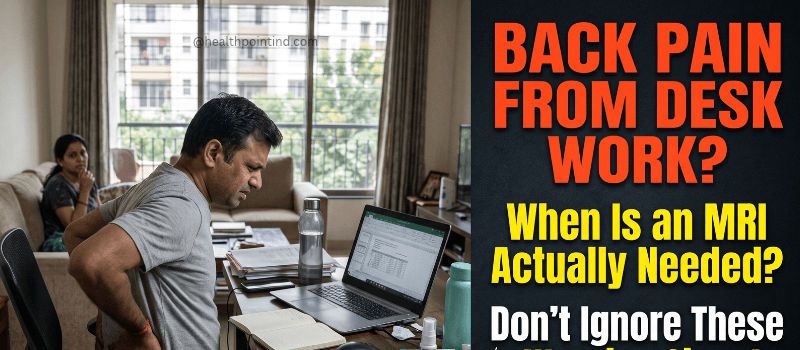
Lower Back Pain From a Desk Job: When You Need an MRI and When You Do Not
Lower back pain from long hours at a desk is very common, and most episodes improve within a few weeks with movement, simple pain relief and better sitting habits. An MRI is usually not needed in the first six weeks unless there are warning signs, such as numbness around the groin, trouble passing urine, fever, a history of cancer or leg weakness that is getting worse. An MRI becomes useful when leg pain from a pinched nerve continues for around six weeks despite treatment, or when your doctor is planning an injection or surgery. This guide explains how doctors make that decision and what you can change at your desk in the meantime.
Why Sitting Hurts Your Back
The spine is built to move. Sitting for long stretches, especially slumped forward over a laptop, loads the discs and stiffens the muscles and joints of the lower back. Weak core and hip muscles, tight hamstrings, little physical activity and stress all add to it. Working from a bed or sofa makes posture worse because the lower back loses its natural support.
Most desk-related back pain is called non-specific or mechanical back pain. This means the pain comes from muscles, ligaments, joints and discs working under strain, without a single structural problem that needs repair. It often feels like a dull ache across the lower back, worse after sitting or when standing up, and better with movement.
Why an Early MRI Often Does Not Help
Medical guidelines from bodies such as the UK’s National Institute for Health and Care Excellence and the American College of Physicians advise against routine imaging for lower back pain without warning signs. There are two reasons.
First, most episodes improve within six weeks whether or not a scan is done, and a normal or abnormal MRI rarely changes the early treatment, which is staying active, pain relief and exercise.
Second, MRI shows a lot of age-related changes, such as disc bulges and dehydrated discs, in people who have no pain at all. Seeing these words on a report can make people more anxious and less active, which can slow recovery. If you already have a report, our guide to reading an MRI report explains what these terms mean.
Warning Signs That Need Urgent Attention
Go to a hospital emergency department immediately if back pain comes with:
- Numbness in the groin, buttocks or inner thighs, sometimes called saddle numbness
- New difficulty passing urine, loss of bladder control or loss of bowel control
- Weakness in one or both legs that is getting worse quickly
These can be signs of cauda equina syndrome, where nerves at the bottom of the spine are compressed. It needs an emergency MRI and often surgery within hours.
See your doctor soon if back pain comes with fever or feeling unwell, unexplained weight loss, a history of cancer, a fall or injury, long-term steroid use, pain that is constant and severe at night, or new back pain after the age of 50. In these situations, imaging is often advised earlier.
Back Pain or Sciatica?
Back pain stays mostly in the back and buttocks. Sciatica is pain that travels from the lower back down the back of one leg, often below the knee, sometimes with tingling, numbness or weakness in the foot. It usually happens when a disc presses on a nerve root.
Sciatica also improves on its own in many people. When leg pain is still significant after about six weeks of treatment, or when there is a clear loss of strength or reflexes, an MRI lumbar spine helps your doctor see which nerve is affected and plan treatment such as a targeted injection or, less often, surgery.
Young adults with back pain that is worst in the morning, with stiffness lasting more than half an hour that improves with exercise rather than rest, may have inflammatory back pain. This needs a different assessment, often including blood tests and an MRI of the sacroiliac joints.
Where an X-ray Fits In
An X-ray shows bones, not discs or nerves. It is useful when a fracture, a slipped vertebra or a change in spinal alignment is suspected, for example after a fall or in someone with osteoporosis. For ordinary desk-related back pain, an X-ray of the lumbosacral spine rarely adds useful information.
Rohan, a 31-year-old developer from Hinjewadi, developed lower back pain after months of working from his sofa. His doctor found no warning signs and advised regular movement, a short course of pain relief and physiotherapy. The back pain eased within three weeks. A few weeks later, pain started running down his left leg into the sole of his foot, with numbness that persisted for seven weeks. At that point, his doctor requested an MRI, which showed a disc protrusion at L5-S1 touching the S1 nerve root on the left. A targeted course of physiotherapy and a nerve root injection settled the leg pain.
Desk Habits That Help Your Back
Small changes at work often make more difference than any test:
- Stand up and walk for two or three minutes every 30 to 45 minutes. A phone reminder helps.
- Keep the top of your screen at eye level. If you use a laptop, add a stand with a separate keyboard and mouse.
- Sit back in the chair with your lower back supported, using a small cushion or rolled towel if needed.
- Keep your feet flat on the floor and your knees roughly level with your hips.
- Take calls standing or walking where possible.
- Avoid working from bed or a low sofa for long periods.
- Build regular exercise into your week, especially walking, swimming and core and hip strengthening.
Bed rest is no longer advised for back pain. Staying gently active, even when it is uncomfortable, usually speeds recovery. A physiotherapist can give you a programme suited to your back.
How Health Point IND Can Help
When your doctor asks for an MRI or an X-ray of the spine, Health Point IND books it at accredited partner centres across Pune and PCMC, with digital report delivery and the images available for your specialist. MRI scans booked through us start at ₹2,999. Prices are up to 60% lower than typical walk-in rates at accredited diagnostic centres. Savings may vary based on location and lab. Share your prescription on +91 77964 00040, and the team will help you find a convenient slot, including areas close to Hinjewadi, Kharadi and Hadapsar.
Frequently Asked Questions
When should I get an MRI for lower back pain?
Usually only if there are warning signs, such as numbness around the groin, bladder or bowel changes, worsening leg weakness, fever, cancer history or a significant injury, or if leg pain from a pinched nerve continues for around six weeks despite treatment. For ordinary back pain without these signs, an early MRI rarely changes the treatment plan.
Can sitting all day cause a disc problem?
Long hours of sitting, particularly with poor posture, increase pressure on the lower discs and stiffen the back, which contributes to pain. Disc changes also come with age and are common in people with no pain at all. Regular movement, good desk setup, and exercise reduce strain and make recovery from an episode quicker.
Is an X-ray enough for back pain?
For most desk-related back pain, neither an X-ray nor an MRI is needed at first. An X-ray shows bones and helps when a fracture, slipped vertebra or alignment problem is suspected. It does not show discs or nerves. If a disc or nerve problem is suspected, an MRI is the test that gives that information.
How long does desk-related back pain take to get better?
Most episodes improve noticeably within two to six weeks with movement, pain relief and attention to posture. Some people have occasional flare-ups, especially during busy periods at work. If pain is not improving after six weeks, spreads down the leg or comes with any warning signs, see your doctor for a review.
Should I rest in bed when my back hurts?
No. Long bed rest tends to slow recovery. Doctors now advise staying as active as you comfortably can, walking short distances, and returning to normal activities gradually. Short rest breaks during a painful day are fine. A physiotherapist can suggest gentle exercises that ease stiffness and strengthen the muscles that support your spine.
Back pain from desk work is common, uncomfortable and, in most cases, temporary. Movement, a better set-up and a little patience usually do more than a scan in the early weeks. Know the warning signs, give treatment a fair trial and let your doctor decide when imaging will help. When it does, Health Point IND can arrange the scan at an accredited centre near your home or office.
Important: This article is for informational and educational purposes only. It is not a substitute for professional medical advice, diagnosis, or treatment. Always consult your doctor or a qualified healthcare professional before undergoing any diagnostic test. For diagnostic test bookings in Pune contact Health Point IND at +91 77964 00040 or visit https://www.healthpointind.com