
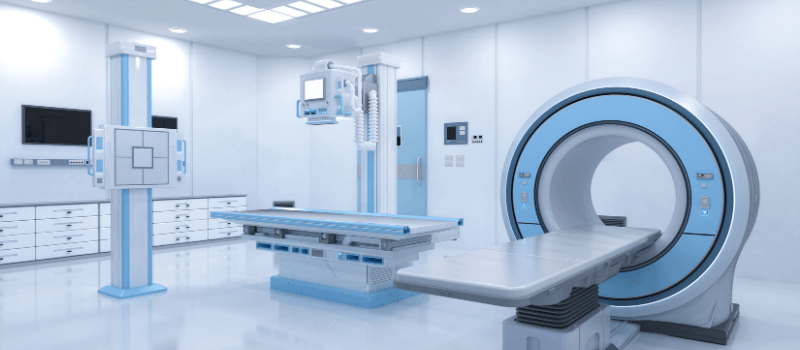
CT Scan in Pune
Book Your CT Scan in Pune
Finding a CT scan is easy. Finding the right one, at a centre equipped for your specific scan, at a price you were quoted upfront, is harder. That is what we do.
Health Point IND works with 27+ accredited diagnostic centres across Pune and PCMC. Send us your prescription, and we confirm the exact scan your doctor ordered, find the nearest centre properly equipped for it, and give you a confirmed price before you travel anywhere.
Guaranteed discounts against direct walk-in pricing. Vetted centres only, all accredited. Near you, across Kothrud, Baner, Pimple Nilakh, Bhosari, Hadapsar, Hinjewadi, Wakad and the rest of Pune and PCMC.
How Booking Works
1. Tell us what you need. Send your prescription on WhatsApp or call us. Our team notes the exact scan, whether plain or contrast, and any protocol your doctor has specified.
2. We find your centre. We identify the nearest partner centre equipped for that specific scan, confirm availability and hold your slot.
3. You save time and money. You get your appointment at our discounted rate, at a vetted centre, with the price confirmed before you go.
CT Scan Cost in Pune
CT pricing depends on the body part, the centre, and whether contrast dye is required. These are the typical discounted rates when booking through us.
| Scan | Typical Walk-in | Health Point IND |
|---|---|---|
| CT Head / Brain | ₹4,000 | From ₹1,999 |
| CT PNS (Sinuses) | ₹5,000 | From ₹1,999 |
| HRCT Chest | ₹6,000 | From ₹2,999 |
| CT Abdomen & Pelvis | ₹7,000 | From ₹2,999 |
| CT KUB | ₹6,000 | From ₹2,999 |
| CT Coronary Angiography | ₹12,000 | From ₹5,999 |
Angiography and guided procedures are priced separately, from ₹5,999. Send your prescription for an exact quote on your specific scan.
What CT Scans We Book
CT Head and Brain - the most commonly ordered CT, used to detect head injury, internal bleeding, clots and stroke quickly.
CT PNS - images the paranasal sinuses, used for chronic sinusitis not responding to treatment and before sinus surgery.
HRCT Chest - high-resolution lung imaging, essential for pneumonia, interstitial lung disease, post-COVID changes and persistent cough.
CT Abdomen and Pelvis - investigates abdominal pain, assesses liver, pancreas and bowel, and detects masses or infection.
CT KUB - a targeted urinary tract scan, and the most accurate test available for locating kidney stones and determining their exact size.
CT Coronary Angiography - visualises the heart’s arteries to detect plaque and blockage.
Spine and joint CT - cervical, lumbar, thoracic and whole spine, plus knee, shoulder, hip, ankle and wrist.
Specialised studies - pulmonary angiography, brain angiography and venography, limb angiography, enterography, colonography, triphasic, urography, myelogram and CT-guided biopsy.
Plain or Contrast?
Many CT scans are performed plain, including CT PNS and CT KUB for stones, since bone and air-filled cavities image clearly without dye.
Contrast is added when your doctor needs to assess blood vessels, characterise a mass, or evaluate infection. Contrast studies cost more and usually require fasting plus a recent kidney function test. Your prescription will specify which you need, and we confirm it when booking.
Why Book Through Us Rather Than Directly
We know the equipment. Different centres run different machines. We know which have the higher slice-count scanners your doctor may prefer for cardiac or angiography work.
We vet the network. We partner selectively with accredited centres, many NABH-accredited, so the quality check is already done.
The price is fixed before you go. Because of our partner arrangements, you pay below direct walk-in rates, with no charges appearing at the billing counter that were not quoted upfront.
How to Prepare
Bring your prescription. A valid doctor’s prescription is required for any CT scan.
Fasting. If contrast has been ordered, expect to fast four to six hours beforehand. No fasting needed for most plain scans.
Remove metal. Jewellery, hearing aids, belts and clothing with metal fastenings all interfere with imaging.
Tell the team if you are or might be pregnant, have any allergy to iodine or contrast dye, or have reduced kidney function.
Bring old reports. Previous CT or MRI scans genuinely help the radiologist compare and spot change.
Frequently Asked Questions
How long does a CT scan take?
The scan itself is usually under five minutes. The full appointment runs 10 to 15 minutes for a plain scan, longer if contrast is used and you need a cannula and brief observation afterwards.
Is a CT scan painful?
No. You lie still on a moving table. If contrast is injected, a brief warm sensation spreading through the body is normal and passes within a minute.
What is a contrast CT scan?
An iodine-based dye injected into a vein, which makes blood vessels and organs stand out far more clearly. Your doctor decides whether your clinical question needs it.
What is the difference between a CT scan and an MRI?
CT uses X-rays and is fast, making it better for bone, lungs, fresh bleeding and emergencies. MRI uses magnets, takes longer, and is considerably better for soft tissue, including brain, spinal cord, ligaments and cartilage.
Is CT scan radiation dangerous?
CT does involve ionising radiation, and modern scanners use dose-reduction technology that has substantially lowered exposure. For a single clinically indicated scan, the benefit clearly outweighs the small risk. Tell your doctor if you have had several CT scans recently.
When will I get my report?
Partner centres typically deliver reports within 24 hours, with digital access to images and the radiologist’s report.
Do I need an appointment or can I walk in?
Booking ahead is better, particularly for contrast studies and angiography, which need preparation. Most plain scans can be arranged same day or next day.