
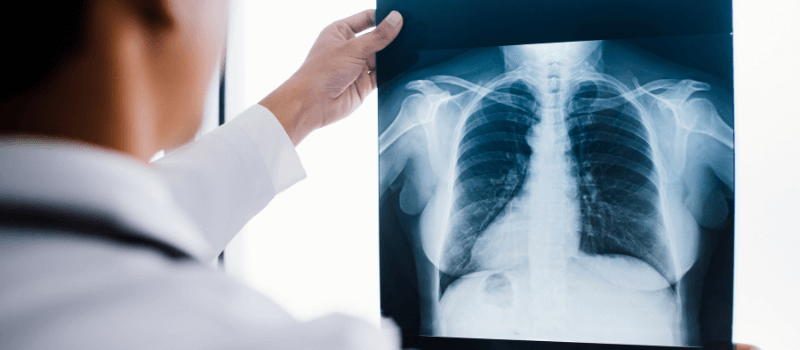
Digital X-Ray in Pune
Why X-Ray Still Matters
With MRI and CT available everywhere, it is easy to assume X-ray is outdated. It is not. X-ray remains the most performed imaging test in the world, and for good reason: it is fast, costs a fraction of advanced imaging, delivers a very low radiation dose, and answers a surprising number of clinical questions in a single image.
For a suspected fracture, a persistent cough, a pre-employment check or a visa medical, X-ray is the right first test rather than a lesser substitute for something else.
Health Point IND books digital X-ray at accredited centres across Pune and PCMC from ₹249, against typical walk-in rates of around ₹1,000. Most scans can be arranged same day.
X-Rays We Book
Chest and body from ₹249- chest, abdomen, KUB, pelvis, sternum and ribs. Chest X-ray is the most commonly ordered, used for cough lasting more than two to three weeks, fever, breathlessness, TB screening, pre-employment medicals and visa requirements.
Spine from ₹499 - cervical, dorsal, lumbosacral, sacroiliac joints, sacrum and coccyx, and whole spine. Used for back and neck pain, alignment assessment, scoliosis and suspected fracture.
Joints and limbs from ₹499 - knee, shoulder, hip, ankle, elbow, wrist, hand and foot. The first investigation after any injury, and standard for assessing arthritic change.
Head and face from ₹499 - skull, PNS, mandible, mastoid, nasal bone, orbit, TMJ and sella turcica. PNS X-ray is commonly ordered for sinus symptoms, though CT PNS gives considerably more detail when surgery is being considered.
Contrast and special studies from ₹2,499 - barium swallow, barium enema, barium meal follow-through, distal cologram, HSG, IVP, MCU, RGU, fistulogram and sialography. These involve contrast material and require specific preparation and appointment scheduling.
What X-Ray Shows Well
Fractures and bone alignment. Joint space narrowing and arthritic change. Pneumonia and other lung infections, which appear as areas of increased whiteness. Fluid around the lungs. Collapsed lung. Heart enlargement. Tuberculosis changes, particularly in the upper lobes. Radio-opaque foreign bodies. Position of medical devices such as pacemaker leads.
What X-Ray Misses
This is worth knowing, because a normal X-ray does not always mean nothing is wrong.
Ligaments, tendons, cartilage and spinal discs are invisible on X-ray. So a normal knee X-ray after a twisting injury rules out fracture but says nothing about whether the ACL or meniscus is torn.
Small lung nodules under about a centimetre are frequently missed, as are nodules hidden behind the heart or ribs. Early interstitial lung disease, pulmonary embolism and coronary artery disease do not show at all.
Undisplaced fractures, particularly of the scaphoid in the wrist, are missed on initial X-ray in a meaningful proportion of cases.
If symptoms persist despite a normal X-ray, that is usually the point at which your doctor moves to MRI or CT.
Contrast Studies
Several X-ray studies use contrast material to outline structures that would otherwise be invisible.
Barium swallow examines the oesophagus for swallowing difficulty. Barium enema and distal cologram examine the large bowel. BMFT follows barium through the small intestine.
HSG checks whether the fallopian tubes are open, a standard step in fertility assessment, and is timed to a specific window in your menstrual cycle, usually days 6 to 11.
IVP images the urinary tract after intravenous contrast. MCU and RGU assess the bladder and urethra.
These all require specific preparation and advance scheduling. We confirm instructions when you book.
How to Prepare
Standard X-rays need no preparation. Remove jewellery, hair clips, belts and anything metallic from the area being imaged. You may be asked to change into a gown.
For a chest X-ray, you stand against the detector, take a deep breath and hold it for a few seconds while the image is taken. Holding a full breath expands the lungs and separates structures, which genuinely improves image quality.
Contrast studies are different, and each has its own preparation, which may include fasting, bowel preparation, or timing within your menstrual cycle. Confirm these when booking rather than on the day.
Tell us if you are or might be pregnant. X-ray during pregnancy is sometimes clinically necessary, and shielding is used, but the decision should be made deliberately.
Radiation
A chest X-ray involves roughly the same radiation as a few days of natural background exposure, which everyone receives simply from living. That is substantially less than a CT scan, which is exactly why X-ray remains the sensible first test rather than going straight to advanced imaging.
Contrast fluoroscopy studies involve more radiation than a plain X-ray, since imaging continues over several minutes, which is one reason they are ordered selectively.
Booking
Send your prescription on WhatsApp to +91 77964 00040. Most plain X-rays can be done same day without an appointment at many centres. Contrast studies need booking because of preparation requirements.
We confirm the nearest accredited centre across Kothrud, Baner, Hadapsar, Hinjewadi, Wakad, Shivajinagar, Aundh, Kharadi, Bhosari and PCMC, with a confirmed price before you travel.
Frequently Asked Questions
How much does an X-ray cost in Pune?
X-rays through Health Point IND start at ₹249 for chest, abdomen, KUB, pelvis and sternum, and ₹499 for spine, joint and head X-rays. Contrast studies including barium, HSG and IVP start from ₹2,499, against typical walk-in rates of around ₹1,000 for plain films.
Do I need an appointment for an X-ray?
Most plain X-rays can be done same day without a prior appointment at many centres. Contrast studies such as barium, HSG and IVP need advance booking because of preparation requirements.
Is X-ray radiation dangerous?
A chest X-ray delivers roughly the radiation of a few days of natural background exposure, which is very low. For a clinically indicated X-ray the benefit clearly outweighs this. Tell your doctor if you have had many X-rays recently or may be pregnant.
Does a normal X-ray mean nothing is wrong?
Not necessarily. X-rays cannot show ligaments, tendons, cartilage or discs, and can miss small lung nodules and some undisplaced fractures. If symptoms persist despite a normal X-ray, your doctor may order an MRI or CT.
Do I need to fast before an X-ray?
No fasting for standard X-rays. Contrast studies, including barium examinations and IVP, have specific preparation requirements, which we confirm when booking.
What is the difference between X-ray and CT scan?
X-ray produces a single flat image where structures overlap. CT takes many images and reconstructs cross-sections, removing the overlap problem and showing far more detail. CT costs more and uses more radiation, so X-ray is often the appropriate first test.
Can I get an X-ray during pregnancy?
Sometimes, when clinically necessary, with abdominal shielding used and the dose kept minimal. Always tell both your doctor and the radiographer if you are or might be pregnant so the decision is made deliberately.
When will I get my report?
Most plain X-ray reports are available the same day with digital delivery. Contrast studies may take slightly longer depending on the radiologist’s review.